Archive for the 'Uncategorized' Category


Demokratie-Monitoring Baden Württemberg vorgestellt

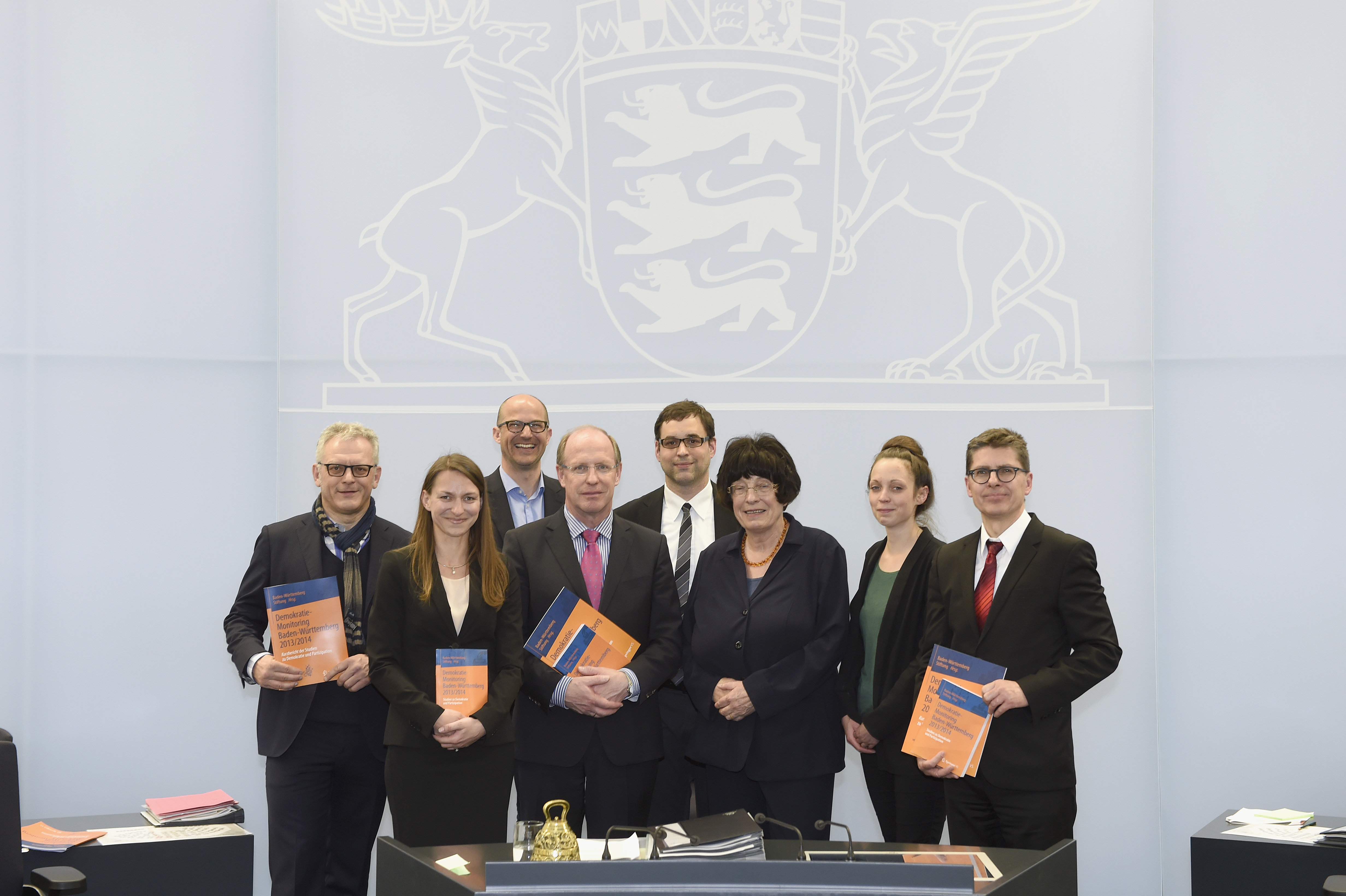
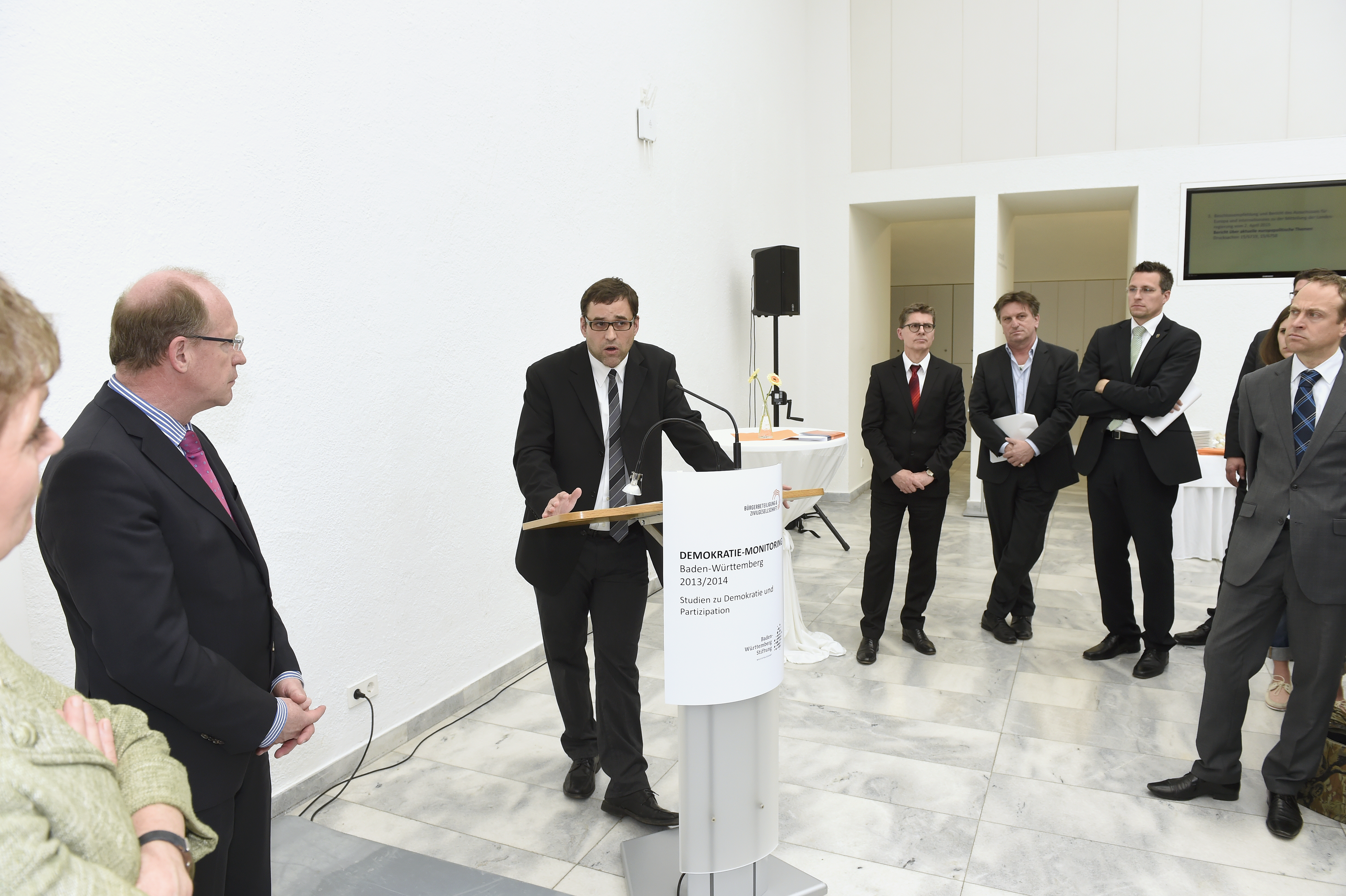
Am 06.05.2015 wurden die Ergebnisse des Demokratie-Monitoring Baden-Württemberg 2013/14 im Landtag der interessierten Öffentlichkeit und den Abgeordneten des Landtags vorgestellt.
_kdb0409

(c)kdbusch; Baden-Württemberg Stiftung

Im Auftrag der Baden-Württemberg Stiftung hatten Forscherteams der Universitäten Tübingen, Freiburg, Mannheim und Stuttgart die “Qualität” der Demokratie untersucht. In der Eröffnungsrede betonte Landtagspräsident Wilfried Klenk MdL die Bedeutung aktiver Bürgerinnen und Bürger für die Qualität der Demokratie. Und die Staatsrätin für Zivilgesellschaft und Bürgerbeteiligung Gisela Erler verwies auf die Notwendigkeit, die Demokratie nicht nur zu vitalisieren, sondern auch regelmäßig ihren Entwicklungsstand zu prüfen.
_kdb0038

©kdbusch; Baden-Württemberg Stiftung

 In der von Daniel Buhr, Josef Schmid und mir durchgeführten Tübinger Teilstudie wurden insgesamt 275 Personen nach lebensweltlichen Bezügen und Mustern politischer Interessen, Orientierungs- und Handlungsmuster gefragt. Und es wurde untersucht, welche Auswirkungen diese auf Demokratie, Demokratiebewertung und die politische Beteiligung haben. Die Interviews dauerten zwischen 12 Minuten und zwei Stunden. Bei der Auswahl der Gesprächspartner wurden sowohl regional-siedlungsräumliche als auch sozio-demographische Kriterien berücksichtigt, um größtmögliche Verallgemeinerbarkeit der Ergebnisse zu erreichen.

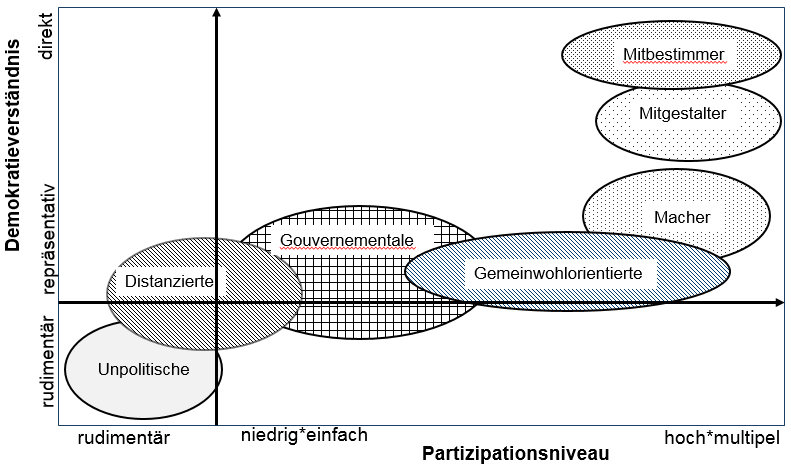
Die Studie bestätigt die These einer Pluralisierung politischer Lebenswelten. Es finden sich insgesamt sieben Lebenswelten, die sich in drei unterschiedliche Gruppen zusammenfassen lassen:

  • Unpolitische und Distanzierte bilden die politikfernen Lebenswelten.
  • Gemeinwohlorientierte, Elektorale und Macher sind drei zentrale delegative Lebenswelten.
  • Mitgestalter und Mitbestimmer konstituieren die partizipatorischen Lebenswelten.

Wie Abbildung 1 zeigt, unterscheiden sich diese Lebenswelten nicht nur im Verständnis von Demokratie und Politik, sondern auch hinsichtlich der Partizipationsniveaus und -formen. Und sie sind unterschiedlich häufig zu finden, wie die Größe der jeweiligen Ellipsen zeigt. Die Muster verweisen auf den dominanten Partizipationsmodus im Falle von Partizipation. Diagonale Muster verweisen auf soziale Partizipation, Karos repräsentieren politische Partizipation und Punkte kombinierte soziale und politische Partizipation. Partizipation kann dann in unterschiedlicher Kombination hinsichtlich der Formen und Themen auftreten.

Abbildung 1: Politische Lebenswelten
politische Lebenswelten

(c) Frankenberger, Buhr, Schmid

Da diese Lebenswelten sich nicht eindeutig über sozio-demographische oder sozio-ökonomische Variablen (z.B. Schicht) oder alltagsästhetische Segmentierungen (Milieus) fassen lassen, bietet die vorliegende Typologie ein erhebliches Potential für gezielte Politikberatung und die Gestaltung partizipativer Verfahren. Denn mit den identifizierten Idealtypen werden wichtige Vorstellungswelten und Handlungsmuster aus der Mitte der Gesellschaft kartiert.
(c)kdbusch; Baden-Württemberg Stiftung

(c)kdbusch; Baden-Württemberg Stiftung

Vor dem Hintergrund der unterschiedlich differenzierten alltagsweltlichen Vorstellungen von und Einstellungen zu Politik und Demokratie stellt sich erneut die Frage: Wie kann die Qualität der Demokratie verbessert werden?

  • Ganz zentral erscheint es, die Kenntnisse über Funktionsweisen und Zuständigkeiten im politischen System zu stärken – Stichwort Demokratieunterricht
  • Möglichkeiten zum Einüben demokratischer Praxis bieten, die auf den Lebensweltlichen Hintergrund zugeschnitten sind.
  • Mehr und unterschiedlichere Formen von Partizipationsmöglichkeiten wären dabei ein Weg.
  • Die systematische Kombination von repräsentativen und partizipatorischen Elementen ein anderer.
  • Nicht zuletzt sollte Politik wieder näher zu den Bürgerinnen und Bürgern gebracht werden sowie Individuelle UND gemeinwohlorientierte Bezüge gestärkt werden.

Literatur:
New Publication: Mikrophysik und Makrostruktur

In the Beginning of 2013 the new special issue “Autokratien im Vergleich” of “Politische Vierteljahresschrift” was published. Amongst others, it contains an article I wrote and developped through the years… It is a pragmatic attempt to refocus research on Autocracies. Contemporary Research on Autocracies is plural. Drawing on systems theory according to Talcott Parsons and the poststructuralist ‘analytics of power’ of Michel Foucault, I propose an analytical approach that accounts for this plurality and offers ideas for a different ‘order of the things’. This heuristics starts from the functional differentiation of the political system and its interchange systems. In a second step it integrates subject, power and technologies of power as core categories for analyzing the functional logics and mechanism of modern autocracies.

  • Rolf Frankenberger (2013): Mikrophysik und Makrostruktur. Überlegungen zu einer Analytik der Macht in Autokratien. In: Steffen Kailitz und Patrick Köllner (eds.), Autokratien im Vergleich, PVS-Sonderheft 47, Baden-Baden: Nomos , pp.60-85

Varieties of Incorporated Capitalism

On the ISA Annual Convention 2013 “The Politics of International Diffusion: Regional and Global Dimensions” 3.-6.April in San Francisco, Daniel Buhr presented a paper we wrote together. It was part of a panel on state capitalism, emerging powers and comparative political economy that was organized by Andreas Noelke  and Tobias ten Brink (Goethe University Frankfurt).

The Paper “Emerging Varieties of Incorporated Capitalism. empirical Evidence and theoretical considerations” adresses the question of how capitalist economies in non-OECD and mostly non-democratic states can be conceptualized and measured. The economic success of state-led forms of capitalism in Russia, China and some other autocracies is one of the most challenging developments for existing typologies of comparative political economy research. For the OECD-World complex theories and models assess the interrelation of polity and economy (e.g. Hall/Soskice), while well-defined approaches only exist for one type of autocracies: those based on Rentier Economies (Luciani). Other systematic approaches are seldom found. But when we look at state-capitalist developments in China, Singapore or Russia, there is strong empirical evidence for a variety of “incorporated capitalism”: bureaucratic market economies and patrimonial market economies. Why are those types of capitalism so successful? In order to answer this question correctly, we have to consider other questions first: 1) Which are the specific patterns of interaction between polity and economy?  2) What are the unique governance mechanisms in those incorporated capitalisms? Using quantitative and qualitative methods we will empirically proof our theoretical findings in order to decode the special complementarities of the bureaucratic and patrimonial market economy in real types.

If you are interested in the paper, please feel free to contact me.

  • Daniel Buhr & Rolf Frankenberger (2013): Emerging Varieties of Incorporated Capitalism. Theoretical Considerations and Empirical Evidence. Paper presented at the International Studies Association (ISA) Annual Convention 2013 “The Politics of International Diffusion: Regional and Global Dimensions”, San Francisco, California, USA, April 3-6, 2013.

La lucha de los mineros…

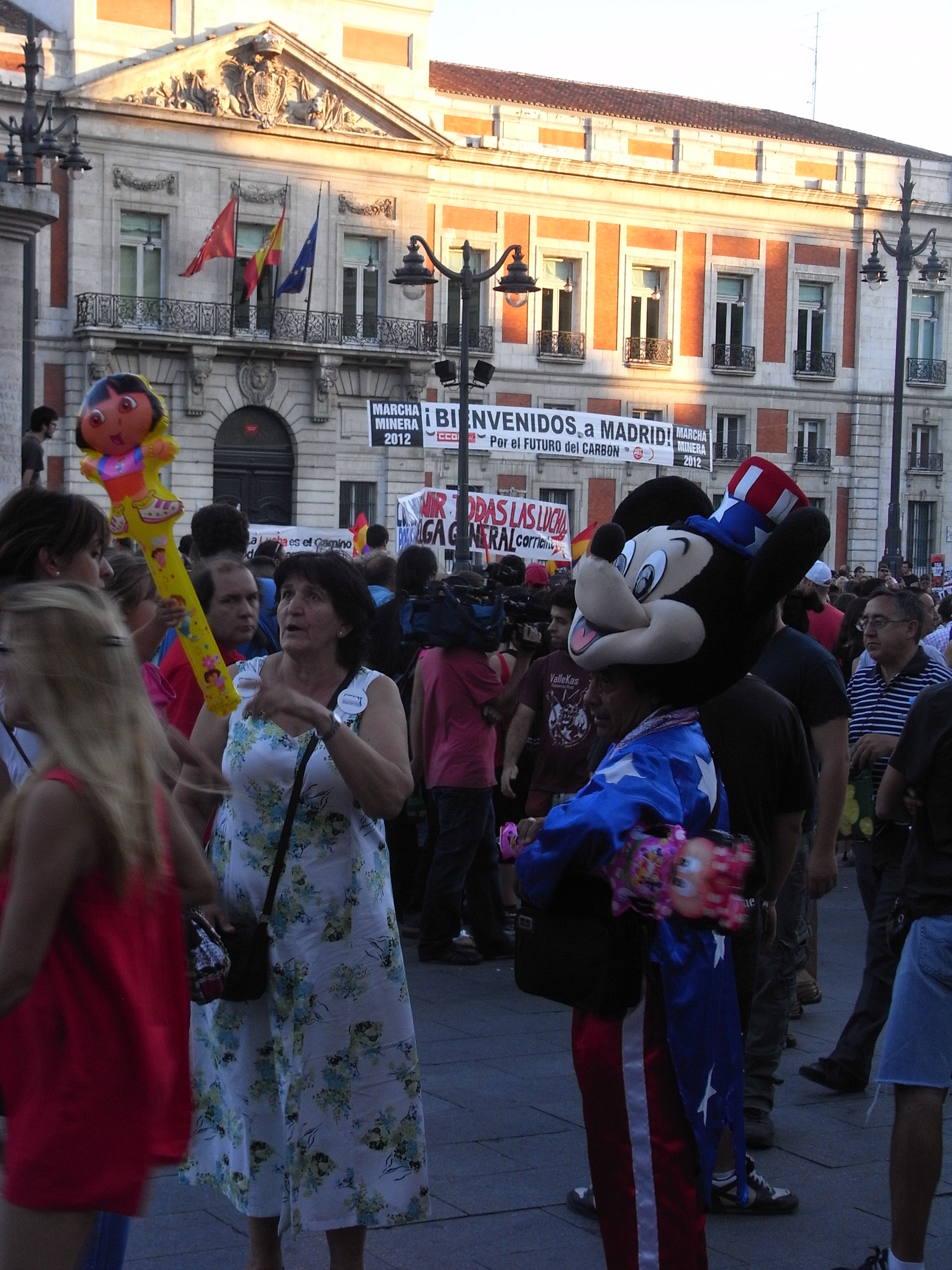
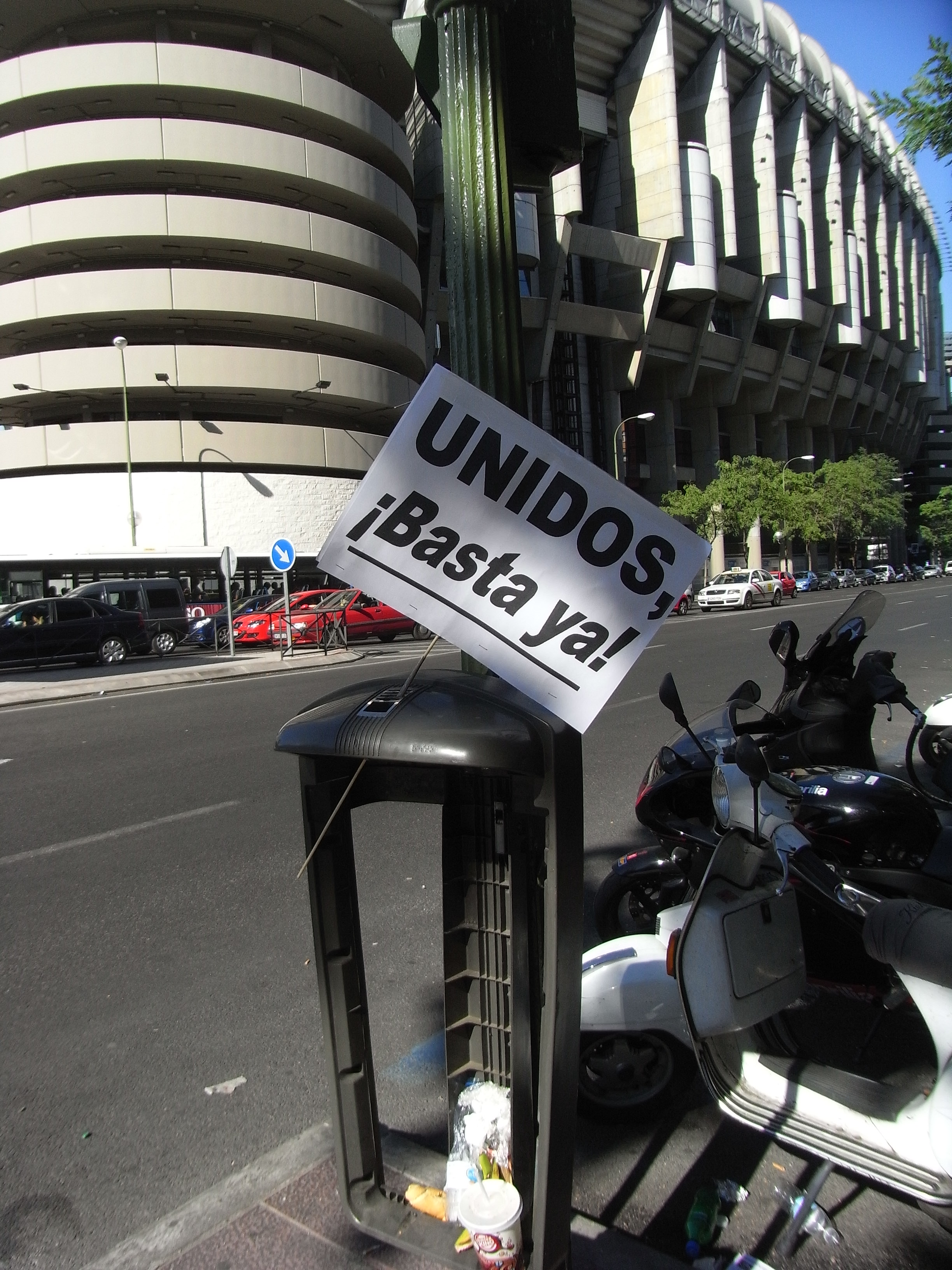
…es la lucha de todos los trabajadores – the struggle of the miners is the struggle of all workers. That is at least the way the communist movement in Spainand others framed the so called black march of the spanish miners to Madrid on 11. July 2012.

It was organized to protest  against the cutting of subventions in the mining industry by at least two thirds. As all over Europe the mining industry suffers from deficits as they are not competitive in the world markets and as especially coal is becoming more and more critizised as a source of energy. Thus, this traditionally important sector was alimented by the state – in order to keep energy supply autonomous and to keep the well organized unions calm. But now wat happened for example in Germany in the 1980ies and 90ies – a substantive change of the industrial structures in the mining areas was implemented and subventions were cut by and by- coincides with the energy turn and the financial crisis all t the same time in Spain. This causes severe social problems and thus the miners ar upset and angry. And in fear of losing their jobs. Who could blame them for this? Their March to Madrid led them to Sol, one of the central places near Plaza Mayor in the core of the city. There the central demonstration took place. Ironically enough, while the miners waving red flags, Mickey Mouse and other figures – which are often interpreted as symbols of american neoliberal capitalim – passed Puerta del Sol.

Later in the evening the demonstration escalated into smaller riots with the demonstrators throwing fireworks on the security forces and burning some stuff in the streets. Police immediately cleared the places, for example Callau, immediately using sticks, tear-gas and other means of the central force. Time by times, also democracy shows that its political regime relies on the monopoly of power, as all political regimes do – be they democratic or autocratic. Sitting in a little tapas bar near Callau I witnessed sounds of shooting, police sirenes and people running away and hiding in house entrances. The landlord also was a little upset, so we cleared the tables in front of the ba and went inside. A few hours later, nothing remained of the demonstrations and the city came back to its calmness and southern relaxedness. It was quite embarassing how cool most of the people reacted even though a distrust  aginst the security forces was quite present. Would be interesting to know what the image o the police is and where it origins. Maybe Franco-ism is not this long ago and the image is far away from the german “friend and helper”.

By the way, IPSA 2nd World Conference of Political Science was quite huge, well organized and lots of interesting panels were held.

From Brasil to Brittany – some summer impressions

Summer is nice, especially when you have the chance to witness two summers within one year. Ok, first one was not really for holidays, but for a conference in Sao Paulo, Brasil. At least, the second one was for relaxing Some impressions from Sao Paulo

It is rush hour on Avenida Paulista, and later it is still rush hour  on Rua Barao de Itapetininga in the city center.

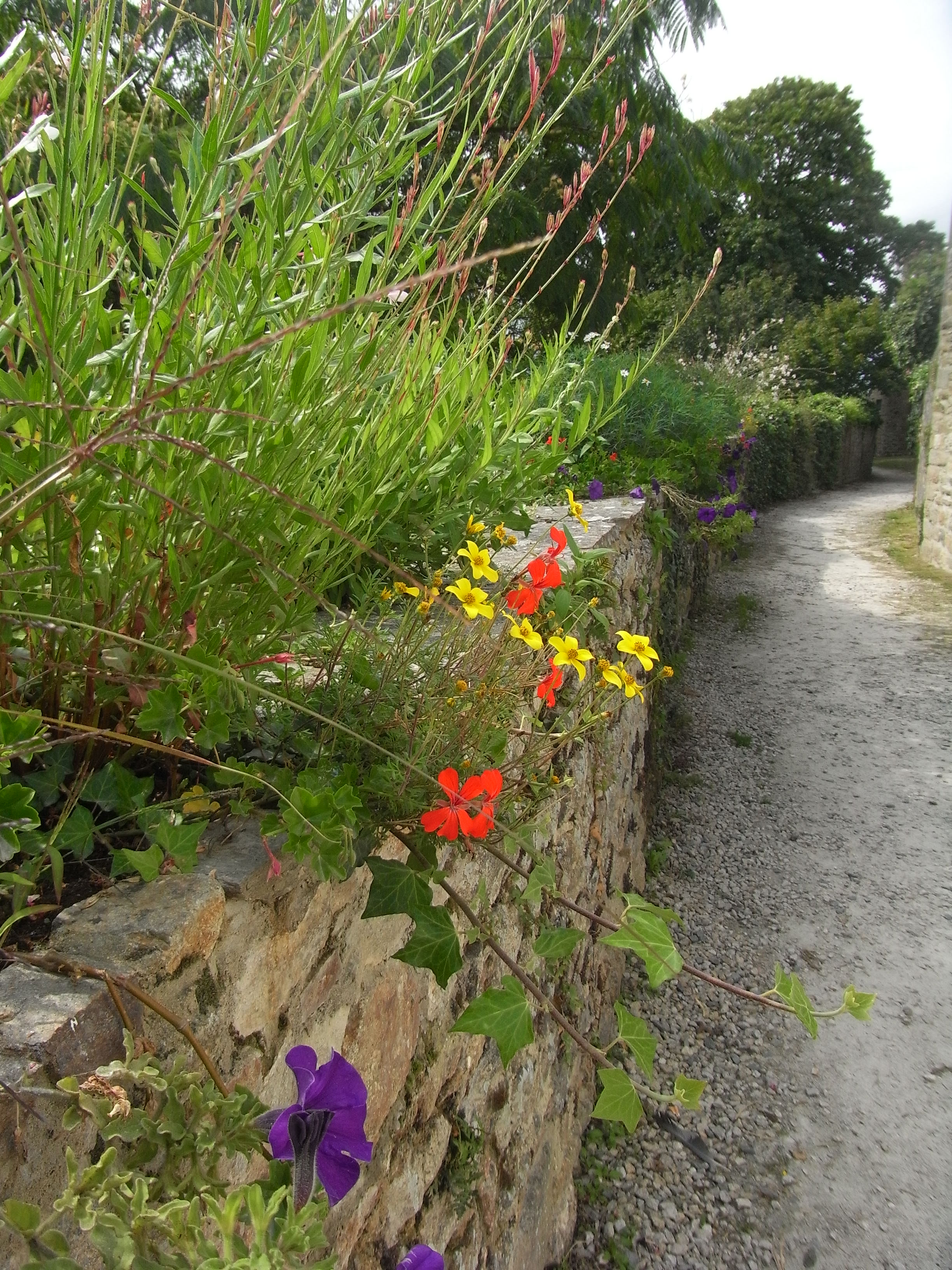
These are, indeed, the sunny sides of Sao Paulo. There are still others, as most of Sao Paulistas can neither afford to live nor to go shopping here… Nevertheless it is a really lifely and dynamic city I liked very much. Brittany instead is what you could call a place to relax from energy-sapping semesters. In the region of Morbihan, you can find beautiful beaches, lovely lighthouses, and lots of evidence of historic and prehistoric activity of mankind, trhe use of which is not always as clear as itt is for lighthouses.

Isn’t it kitschy, the “Tour des Anglais” in Pénerf-Damgan? Not less pittoresque is the small village of La Roche-Bernard some 30 kilometers southeast with its city centre houses being built rom the 13th to 17th century. Today it is used by artists and artisans – and gardeners – as studios.

The next one is a more or less neolithic one. The Cairn “Petit Mont” on Rhuys peninsula looks down upon the Harbour of Arzon at the Gulf of Morbihan inlet. This cairn was bulit between 7000 and about 2000 b.c. by ancient builders. And it witnesses what we ironically could call  German “Gründlichkeit” as in World War 2, the Wehrmacht didn’t find a better place to construct a bunker of the Atlantic wall. Today, both monuments are integrated in the Petit Mont Documentation Center.

Now, as summer has gone and workoad is high again, a new semester will start soon…


Categories